Für die volle Funktionalität dieser Site ist JavaScript notwendig. Hier finden Sie eine
Anleitung zum Aktivieren von JavaScript in Ihrem Browser
.
zum Inhalt springen
zum Footer springen
Institut für Biomaterialien und biomolekulare Systeme
Uni
versität Stuttgart
F
akultät
04
Sprache dieser Seite
de
en
Suche
Hauptnavigationspunkte
Suche
Suche
zurück
Institut
Forschung
Lehre
Abteilung Biobasierte Materialien
Abteilung Bioenergetik
Abteilung Biophysik
Abteilung Intelligente Biointegrative Systeme
Abteilung Microrobotic Biomedical Systems
Abteilung Neurobiologie
Abteilung Pflanzen-Biotechnologie
Research Unit - Systemische Neurobiologie
Research Unit - Molekulare und Synthetische Pflanzenvirologie
??? NavText ???
??? NavText ???
??? NavText ???
Abteilung Bioenergetik
Lehre
Forschung
Publikationen
Team
Forschung
Strukturaufklärung von der photosynthetische Einheit von R. rubrum
Abteilung Biobasierte Materialien
Lehre
Forschung
Publikationen
Team
Forschung
Biosynthese von Materialien
Biomineralisierung in Ciliaten
Bio-Computational Analysis und Simulationen von mechanosensitiven Prozessen
Methodische Schwerpunkte
Abteilung Biophysik
Lehre
Forschung
Publikationen
Team
Forschung
Nanoporen Biosensorik
Proteintranslokation in Mitochondrien
Apoptose und Mitochondrien
Lehre
Biophysikalische Grundlagen der Zellphysiologie
Biomechanik der Zelle
Bioanalytik I
Bioanalytik II
Publikationen
cover_images
Cover-Gallery
Institut
Team
Kontakt
Abteilung Intelligente Biointegrative Systeme
Publikationen
Research Unit - Molekulare und Synthetische Pflanzenvirologie
Lehre
Forschung
Publikationen
Team
Forschung
Molekularvirologische Projekte mit Geminiviren
Nanobiotechnologische Projekte mit Virusderivaten
Abteilung Neurobiologie
Lehre
Forschung
Publikationen
Team
Forschung
Physiologie von Lern- und Gedächtnisprozessen
Lernen und Entscheidungsprozesse
Physiologie von Lern- und Gedächtnisprozessen
Forschnugsprojekte
Research Unit - Systemische Neurobiologie
Forschung
Lehre
Publikationen
Team
Abteilung Pflanzen-Biotechnologie
Lehre
Forschung
Publikationen
Team
Forschung
Pflanze/Umwelt-Interaktion
Subzelluläre Kompartimentierung
Regulation des Primärstoffwechsels
Mathematische Modellierung
Lehre
BiolSys
DynModel
PflanzenBiotechnologie
PflanzlicheSysteme
WissMet
Team
Ehemalige Mitarbeiter
Navigation schließen
Abteilungen des IBBS
Biobasierte Materialien
Microrobotic Biomedical Systems
Biophysik
Intelligente biointegrative Systeme
Neurobiologie
Pflanzen-Biotechnologie
Research Units & Guests
Systemische Neurobiologie
Aquatische Biodiversität und wissenschaftliches Tauchen
Molekulare und Synthetische Pflanzenvirologie
Bioenergetik
Funktionseinheiten des IBBS
Analytik
Zellbiologie
Elektronenmikroskopie
Molekularbiologie
Aktuelles
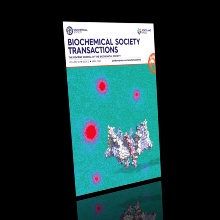
Biochemical Society Transactions cover features single-molecule imaging of TOM
New insights into the structure and dynamics of the TOM complex in mitochondria. Nussberger et al. Biochem. Soc. Trans. 52:911-922 (2024)
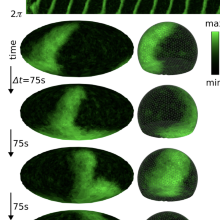
Erisis et al., 2024 ''Self-organization of PIP3 waves is controlled by the topology and curvature of cell membranes.''
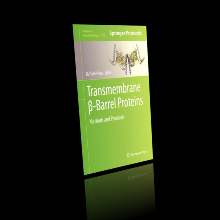
TOM core complex cryoEM structure on Springer Protocols - Methods in Molecular Biology cover
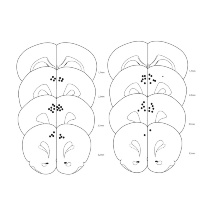
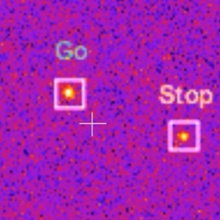
Münster A, Huster J, Sommer S, Traxler C, Votteler A, Hauber W (2024) Enhanced Risky Choice in Male Rats Elicited by the Acute Pharmacological Stressor Yohimbine Involves Prefrontal Dopamine D1 Receptor Activation.
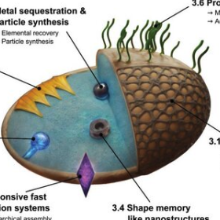
Dörr et al., 2023 ''Functional Materials and Principles in Ciliates''
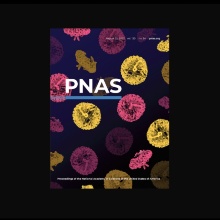
TOM holo compex cryoEM structure on PNAS cover
G. B. Shaw: „Keine Liebe ist aufrichtiger als die Liebe zum Essen“
Münster A et al. Neuropharmacology 2022 "Effects of GPR139 agonism on effort expenditure for food reward in rodent models: Evidence for pro-motivational actions"
PhD lecture by Shuo Wang, Monday July 31, 10 am, room 9.120
JoVE Video: Single-molecule imaging of lateral mobility and ion channel activity
ICP and Biophysics group in FORSCHUNG LEBEN 04/23: The use of nanopores to detect potential diseases
Weitere Informationen
Institut
Organisation des Instituts, Personenlisten, zentrale Kontaktinformationen
Forschung
Forschung des Instituts
Lehre
Lehre des Instituts
Kontakt
Institut für Biomaterialien und biomolekulare Systeme, Universität Stuttgart
Pfaffenwaldring 57 , D-70569 Stuttgart, Germany
Weitere Informationen
E-Mail schreiben
Zum Seitenanfang